
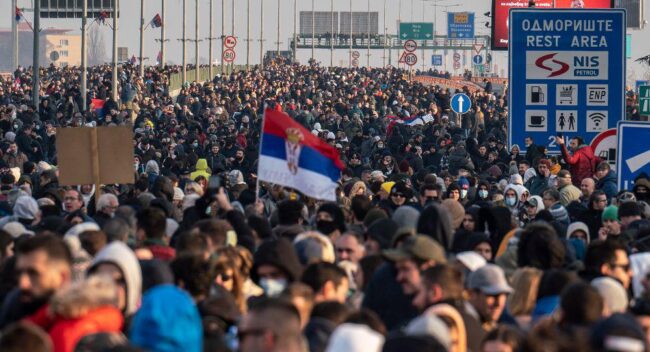
The Serbian community is a vast and dynamic group, extending far beyond the borders of the Republic of Serbia. This global diaspora, united by a shared language, culture, and Orthodox faith, plays a significant role in the social and economic landscape of many countries. The history of Serbian migration is complex. It is marked by periods of seeking economic opportunity, fleeing political instability, and retaining strong ties to the homeland.
Understanding the Serbian community requires recognizing its resilience and its commitment to preserving national identity while integrating into new societies. Consequently, this community acts as a cultural bridge between the Balkans and the world. This article will guide readers through the historical waves of Serbian migration and the geographical distribution of the diaspora. Furthermore, we will explore the core cultural pillars that sustain this identity. Finally, we will examine the role of the Church and community organizations in maintaining their cohesion in the modern era.
1. Historical Waves of Migration and Diaspora Distribution
The Serbian diaspora is not monolithic. Its formation spans centuries and is driven by distinct historical events.
Major Migration Waves
The first major wave of Serbian emigration occurred as early as the 14th century, following the expansion of the Ottoman Empire. This led to significant settlements in Hungary and Austria-Hungary. A second major wave took place in the late 19th and early 20th centuries. During this period, many Serbs sought economic opportunities in North America, particularly in the United States and Canada.
More recently, the third and most prominent wave followed the breakup of Yugoslavia and the Balkan wars of the 1990s. This displacement resulted in large Serbian communities forming in Western Europe (Germany, Austria, Switzerland), Australia, and further expanding the existing North American diaspora. The reasons for leaving were primarily political and economic, but the cultural ties remained strong.
Global Footprint
Today, sizeable Serbian communities can be found in virtually every developed nation. The largest communities outside the Balkans are located in:
- Germany and Austria: These countries host some of the biggest European Serbian populations, often rooted in guest worker programs from the Yugoslav era.
- United States and Canada: Major centers include Chicago, Toronto, and Vancouver, where community life is highly organized.
- Australia: Sydney and Melbourne are home to vibrant Serbian cultural and religious centers.
2. Core Pillars of Serbian Identity
Despite geographical separation, the Serbian identity is robustly maintained through several cultural institutions.
The Serbian Orthodox Church (SPC)
The Orthodox Christian faith is perhaps the most crucial unifying force for the global Serbian community. The Serbian Orthodox Church does not just serve a religious purpose. Instead, it functions as the central hub for social and cultural life abroad. Church halls and parishes host language schools, folklore groups, and national holiday celebrations.
Language and Cyrillic Script
The Serbian language remains a key marker of identity, even among second and third-generation immigrants. Parents and community leaders put considerable effort into teaching the language and its traditional Cyrillic script to younger generations. This dedication is vital to ensure that cultural knowledge and family connections are not lost.
Slava: The Patron Saint Day
The Slava, a unique Serbian Orthodox tradition of celebrating a family’s patron saint, is perhaps the most visible cultural practice maintained in the diaspora. The Slava celebration is more than a religious feast. It is a massive family and community gathering. This tradition reaffirms familial bonds and provides a tangible connection to the ancestral homeland, regardless of where the family is physically located.
3. The Role of Community Organizations and Integration
Serbian communities actively engage in self-organization to foster belonging and successful integration.
Self-Organization and Support
Numerous cultural, humanitarian, and sports organizations have been established by the diaspora. These groups serve multiple functions. They range from providing initial support to newcomers to hosting large-scale cultural festivals. In major cities, Serbian football clubs and folklore ensembles are especially popular. These activities provide a venue for youth to connect with their heritage.
Integration and Contribution
The Serbian diaspora is highly integrated into the host countries. Serbs have made significant contributions in fields ranging from science and technology (Nikola Tesla is a notable historical example) to sports (Novak Djokovic) and arts. While they embrace the culture and economy of their new homes, they simultaneously enrich those societies with the distinct culture and traditions of the Balkans.
Conclusion
The global Serbian community is a testament to the power of cultural endurance and identity. Despite waves of migration and the challenges of distance, the shared faith, language, and unique customs like the Slava continue to bind them. Ultimately, the Serbian diaspora successfully balances preserving a rich, historical heritage with active participation in the modern, multicultural world. Their story is one of resilience, community, and the unwavering spirit of the Balkans.
