
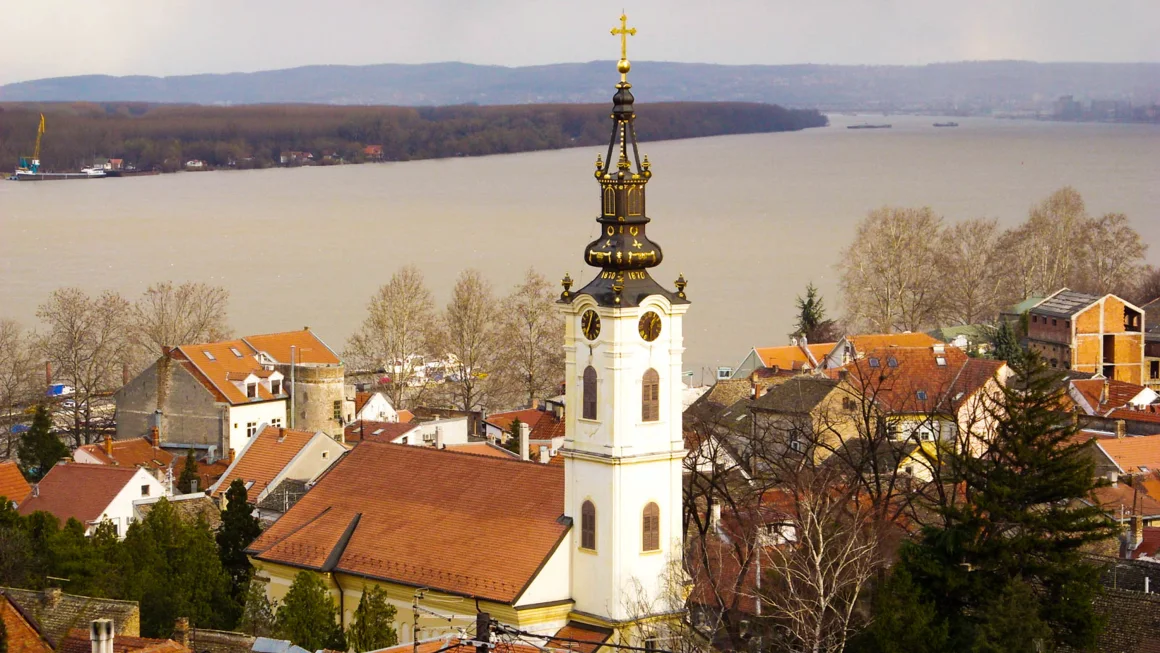
Belgrade is famous for its chaotic energy and a unique mix of Ottoman and Socialist architecture. However, a short trip across the bridge reveals a completely different world. Zemun was once a separate city located on the border of the Austro-Hungarian Empire. Consequently, it maintains a distinct charm that feels more like Central Europe than the Balkans. Today, as a municipality of Belgrade, Zemun offers a peaceful retreat filled with cobblestone streets and fresh seafood.
For centuries, the Danube River served as a rigid boundary between two great powers. The Ottomans controlled Belgrade, while the Austrians ruled Zemun. This historical friction has left Zemun with an architectural identity that stands in beautiful contrast to the rest of the capital.
The Heart of Zemun: Gardoš Hill and the Millennium Tower
The most iconic landmark in this area is undoubtedly the Millennium Tower, which is also known as the Gardoš Tower. The Hungarians built it in 1896 to celebrate a thousand years of their settlement in the region. Interestingly, it was one of seven such towers erected across the empire at that time.
To reach the tower, you must navigate a labyrinth of narrow, winding alleys. These paths are paved with ancient cobblestones that require careful stepping. As you ascend, the colorful houses and hidden courtyards transport you back to the 19th century. Once you reach the peak of Gardoš Hill, the reward is a breathtaking view. From this vantage point, you can see the orange-tiled roofs of Zemun, the wide expanse of the Danube, and the distant skyline of modern Belgrade.
The Danube Quay: A Mediterranean Escape
The soul of Zemun resides along the Zemunski Kej, or the Zemun Quay. This long, tree-lined promenade is a favorite gathering spot for both locals and tourists. While walking along the quay, the atmosphere feels remarkably Mediterranean. For instance, people sit at open-air cafes while children feed the resident white swans. Furthermore, the sound of live acoustic music often drifts through the air during the evenings.
The quay is also home to some of the best seafood restaurants in Serbia. Because of its riverside location, Zemun has maintained a centuries-old tradition of fishing. Many of the “kafanas” or traditional taverns here serve fresh Danube fish, such as pike-perch and trout. Dining by the water as the sun sets is perhaps the most authentic way to experience the local lifestyle.
Architecture and Hidden Squares
A walk through central Zemun feels like stepping into a miniature version of Vienna or Budapest. The architecture is predominantly Baroque, Neoclassical, and Art Nouveau.
Veliki Trg and Mali Trg, the large and small squares, serve as the centers of daily activity. Here, you will find the vibrant Zemun Open Market. This market is a sensory delight where farmers sell fresh honey, homemade “ajvar,” and seasonal fruits. Additionally, surrounding the squares are significant religious buildings. These include the Church of the Assumption and the Catholic Church of Saint Wendelin, which highlight the town’s diverse religious history.
Great War Island and Lido Beach
During the summer months, Zemun becomes a hub for outdoor enthusiasts. Great War Island is located exactly at the confluence of the Sava and Danube rivers. While most of the island is a protected nature reserve, its northern tip features the popular Lido Beach.
A pontoon bridge is usually erected in July and August so that pedestrians can cross the water easily. Unlike the more commercialized city beaches, Lido offers a rugged and natural environment. It is the perfect place for those who want to escape the city heat. Visitors can enjoy a swim in the Danube or play a game of beach volleyball under the shade of massive trees.
The Spirit of Old Taverns
Zemun is famous for its “bohemian” spirit. While Belgrade has its famous Skadarlija district, Zemun has its own legendary taverns that have remained unchanged for decades. These places are not just restaurants; rather, they are cultural institutions where sailors and artists have gathered for generations.
In these kafanas, the pace of life slows down significantly. The service is unhurried because the emphasis is on long conversations and “tamburica” music. For a traveler, spending an evening in a Zemun tavern provides a deep look into the Serbian concept of “merak.” This term refers to the art of deriving deep pleasure from simple, peaceful moments.
How to Best Experience Zemun
To truly appreciate the magic of Zemun, you should plan a full-day visit. Here is a suggested flow for your trip:
- Morning: Start at the Open Market to grab fresh pastries and observe the local buzz.
- Midday: Climb Gardoš Hill and visit the Millennium Tower for panoramic photos.
- Afternoon: Take a slow walk along the Danube Quay and stop to watch the swans.
- Evening: Enjoy a dinner of fish soup and grilled carp at a traditional riverside tavern.
Conclusion
In summary, Zemun is a city within a city where history is felt in every brick and every wave of the Danube. It provides a necessary balance to the high intensity of central Belgrade. While Belgrade represents the energetic future of the Balkans, Zemun represents the grace and nostalgia of Central Europe. Ultimately, Zemun offers a quiet and shimmering world that is impossible to forget.
