
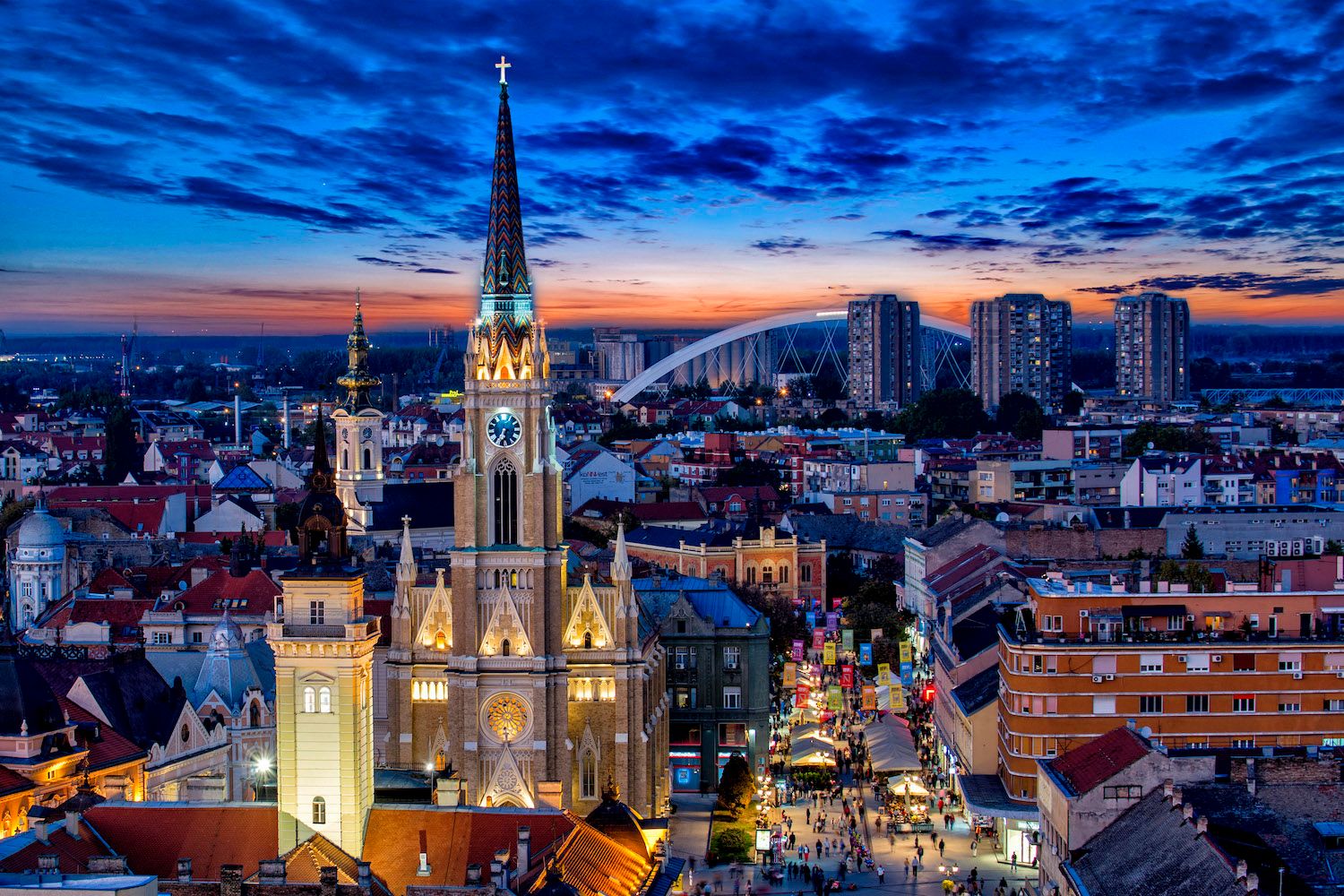
While Belgrade captures the world’s attention with its high energy and gritty history, Serbia’s second city offers a different kind of charm. Novi Sad, the capital of the Vojvodina province, sits gracefully along the banks of the Danube River. Known as the “Serbian Athens,” this city serves as a hub for culture, education, and art. With its Austro-Hungarian architecture, a massive fortress, and a relaxed Mediterranean-style pace of life, Novi Sad is an essential stop for any traveler exploring the Balkans.
The Crown Jewel: Petrovaradin Fortress
Every visit to Novi Sad begins at the Petrovaradin Fortress. This massive structure sits on a volcanic rock overlooking the Danube. Often called the “Gibraltar on the Danube,” it took 88 years to build and remains one of the best-preserved artillery bastions in Europe.
The fortress is famous for its “Reversed Clock.” On this clock tower, the large hand shows the hours and the small hand shows the minutes. This design allowed fisherman on the river to see the time from a distance. Today, the fortress serves as a cultural center. It houses artists’ studios, a museum, and several restaurants with panoramic views of the city. If you visit in July, the fortress transforms into the stage for the EXIT Festival, one of the largest and most famous music festivals in Europe.
Stepping Into the Stari Grad (Old Town)
Crossing the bridge from the fortress brings you into the heart of Novi Sad’s Old Town. The city center is almost entirely pedestrian-friendly, making it perfect for a leisurely afternoon walk.
Trg Slobode (Liberty Square) This is the city’s main square and its most beautiful gathering point. On one side stands the Name of Mary Church, a neo-Gothic Catholic cathedral with a stunning roof made of Zsolnay tiles. Across from the church sits the neo-Renaissance Town Hall. The square is often filled with street performers, seasonal markets, and outdoor cafes that stay busy from morning until late at night.
Zmaj Jovina and Dunavska Streets These two streets represent the soul of the city’s commercial and social life. The buildings are painted in pastel colors, reflecting the city’s Austro-Hungarian heritage. Zmaj Jovina is lined with shops and cafes, while Dunavska Street leads you toward the lush Dunavski Park. This park is a peaceful retreat featuring a small lake, walking paths, and busts of famous Serbian poets and scientists.
Life Along the Danube
Novi Sad’s identity is inseparable from the Danube. During the warmer months, the “Kej” (the quay or promenade) becomes the city’s most popular social spot. You will see locals jogging, cycling, or simply enjoying the sunset over the water.
If you visit during the summer, you must head to Štrand. This is one of the most beautiful sandy beaches on the entire Danube. It feels more like a seaside resort than a riverbank. Štrand offers bars, restaurants, volleyball courts, and live music. It is the perfect place to experience the “Lako ćemo” (we will take it easy) philosophy that defines the local lifestyle.
A Gateway to Fruška Gora and Sremski Karlovci
One of the best reasons to visit Novi Sad is its proximity to Fruška Gora National Park. Known as the “Holy Mountain,” this forested area is home to 16 active Orthodox monasteries. It is a haven for hikers and nature lovers.
Just a 15-minute drive from the city is Sremski Karlovci, a small town that looks like it belongs in a fairy tale. This town was once the spiritual and cultural center of Serbs during the Habsburg Empire. Today, it is famous for its baroque architecture and its wine. You must try Bermet, a local dessert wine that was famously served on the Titanic. Several family-owned wine cellars offer tastings where you can learn about the region’s long history of viticulture.
Gastronomy: The Flavors of Vojvodina
The food in Novi Sad reflects the diverse history of the region. It is a mix of Serbian, Hungarian, and German influences. Local dishes are hearty and flavorful.
- Salaš Farmhouses: For the most authentic experience, visit a “Salaš.” These are traditional farmhouses located just outside the city. They serve home-cooked meals like goulash, schnitzel, and homemade pasta, often accompanied by live tamburica music.
- Riblja Čorba: Given its location on the river, fish soup is a local staple. It is usually spicy and served in a traditional metal pot.
- Pastries: Don’t miss the local bakeries. Try “Krempita” (custard pie) or “Gomboce” (plum dumplings) for a taste of central European sweetness.
Practical Tips for Travelers
- Getting There: Novi Sad is very accessible. The high-speed “Soko” train connects Belgrade and Novi Sad in just 36 minutes, making it an easy day trip or a convenient transfer.
- Currency: Serbia uses the Dinar (RSD). While cards are accepted in most city shops, carry cash for smaller stalls or rural “Salaš” visits.
- Walking City: Novi Sad is flat and compact. You can see most of the major sites on foot, but the local bus system is also efficient and affordable.
Conclusion
Novi Sad is a city that invites you to slow down. It offers the perfect balance of historical significance and modern leisure. Whether you are exploring the tunnels beneath the Petrovaradin Fortress, sipping wine in a baroque courtyard, or lounging by the Danube, the city’s gentle atmosphere will win you over. It is a place where history is respected, but the joy of the present moment always takes priority.
