
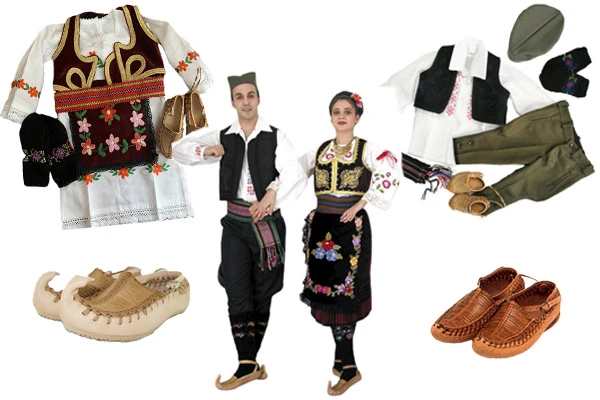
The national costume of Serbia, known collectively as narodna nošnja, is far more than mere clothing. It is a vibrant, living document that narrates centuries of Serbian history, culture, and social geography. Each stitch, pattern, and piece of embroidery holds deep symbolic meaning, indicating the wearer’s region of origin, social status, marital status, and even their wealth. Consequently, studying the narodna nošnja provides a direct window into the complex identities that make up the Serbian nation.
The evolution of these costumes was heavily influenced by historical events. Specifically, the long period of Ottoman rule in the south and Austro-Hungarian influence in the north created distinct regional styles. Despite this fragmentation, core elements remain universally Serbian. This article will take you on a journey through the most iconic components of the Serbian national dress. We will examine the key regional differences, detail the main garments for both men and women, and finally, discuss the enduring symbolism that these beautiful ensembles carry today.
1. Regional Diversity: The North vs. The South
Serbian national dress is not uniform; instead, it varies drastically based on geography, reflecting the country’s diverse historical influences.
The Influence of the Pannonian Plain (North)
In northern regions like Vojvodina, the costumes reflect the proximity to Central Europe. Here, the influence of Austro-Hungarian and Hungarian styles is evident. As a result, costumes from this area are often characterized by richer materials like silk, velvet, and lace. The embroidery tends to be more precise and geometric, and the color palette is broader, including pastels and deep jewel tones. Furthermore, accessories like beaded jewelry and ornate headpieces are common.
The Influence of the Ottoman Balkans (South)
Conversely, in the southern and central regions (such as Šumadija and Kosovo), the costumes bear the traditional Balkan stamp. These ensembles often feature wool and homespun linen, making them more practical for mountainous terrain. The colors are typically dominated by white, red, and blue. Most importantly, the embroidery in the south is thick, colorful, and heavily symbolic, often using motifs of flowers and ancient geometric patterns to ward off evil and signify fertility.
2. Key Components of the Serbian Dress
Despite regional differences, certain garments form the fundamental structure of the Serbian national costume for both men and women.
Women’s Attire
The foundation of the female costume is the košulja, a long, linen or cotton chemise. This garment is typically adorned with intricate embroidery on the sleeves and collar. Layered over this is the jelek, a sleeveless, tight-fitting vest made of velvet or wool. The jelek is crucial as it often showcases the most lavish decoration, including gold thread and sequins. Furthermore, women wear one or two pregače (aprons) over a pleated wool skirt (suknja). These aprons are highly decorative and vary significantly by village.
Men’s Attire
Men’s costumes are equally complex. They also begin with a košulja (shirt), often worn tucked in. The most recognizable male garment is the jelek (vest) or a short jacket called džamadani, which is often made of wool or suede. However, the most iconic elements are the šubara (a fur hat) or the šajkača (a traditional boat-shaped wool cap), and the opanci (traditional leather peasant sandals). The opanci are particularly noteworthy for their distinctive curled toe, which can indicate the wearer’s home region.
3. Symbolism and Modern Significance
The true value of narodna nošnja lies in its powerful symbolism and continued cultural relevance.
Colors and Motifs
Symbolism is woven into every aspect of the dress. The colors white, red, and blue are thematically important, not only representing the Serbian flag but also carrying older meanings: white for purity, red for life and bravery, and blue for faith and the sky. Furthermore, motifs like the sun, the double-headed eagle, and various geometric spirals are used to invoke protection, good fortune, and link the wearer to ancient Slavic traditions.
A Living Heritage
Today, while the national costume is rarely worn in daily life, its presence in cultural life remains strong. You will see it at folk dance festivals (such as Kolo performances), weddings, and national holidays. By preserving and wearing these historical garments, Serbians reaffirm their cultural continuity and celebrate the richness of their regional identities. Therefore, the costume serves as a powerful tool for transmitting heritage across generations.
Conclusion
The Serbian national costume, narodna nošnja, is a fascinating example of how clothing can encapsulate the entire history of a people. Its regional variations tell a story of geography and conquest, while its fundamental garments speak to a shared national identity. Ultimately, the costume is a beautiful and intricate symbol of Serbian resilience, creativity, and unwavering cultural pride.
