
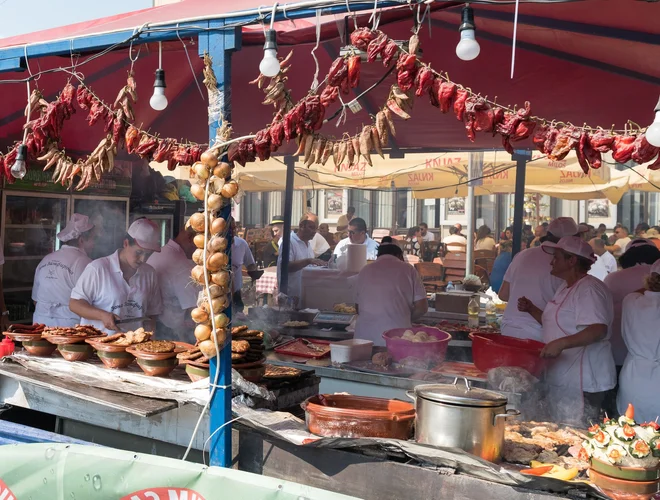
In the southern heart of Serbia, the city of Leskovac holds a legendary status among food lovers. While many know the city for its textiles and spicy peppers, its true fame comes from the “roštilj” or grilled meat. Every year, during the transition from summer to autumn, the city hosts Roštiljijada. Also known as the Leskovac Grill Festival, this week-long event stands as one of the largest food festivals in Europe. It attracts hundreds of thousands of visitors who come to witness a spectacular symphony of smoke, fire, and flavor.
Roštiljijada represents much more than a simple food fair. It is a cultural phenomenon that celebrates the deep-rooted Balkan tradition of outdoor grilling. For seven days, the city turns its main boulevard into a massive, open-air kitchen. The aroma of sizzling meat fills the air, while the rhythmic sound of traditional trumpets echoes through the crowded streets.
The Heart of the Festival: The Leskovac Grill
Why does the Leskovac grill deserve its own festival? The secret lies in the “Leskovac meat mix.” Unlike generic burgers, an authentic Leskovac pljeskavica (meat patty) or ćevapi (skinless sausages) contains high-quality beef mixed with local seasonings. Often, grill masters add a precise amount of salt and the famous local paprika to the mixture.
The preparation follows a disciplined art form. Grill masters age the meat for at least 24 to 48 hours to achieve the perfect texture. Furthermore, traditionalists always use “ćumur” or charcoal. This choice of fuel imparts a distinct smoky depth that gas or electric grills simply cannot replicate. At the festival, you will see “Roštilj-majstori” (grill masters) who have spent decades perfecting their craft. They flip the meat with incredible speed and precision over the glowing coals.
Breaking Records: The Quest for the Giant Pljeskavica
The undisputed highlight of Roštiljijada is the competition for the world’s largest pljeskavica. Each year, teams of master grillers gather to break the previous year’s record. This event is not just a cooking test; it is a feat of engineering and teamwork.
The process requires a massive amount of meat, often exceeding 67 kilograms. The cooks shape the meat into a giant circle on a special metal sheet. However, the most tense moment for the audience is “the flip.” Flipping a patty that weighs more than a human being requires perfect timing and immense skill. When the team successfully flips the meat without breaking it, the crowd erupts in cheers. Finally, the team slices the giant patty and shares it with the spectators. This event perfectly symbolizes the festival’s grand scale and competitive spirit.
A Sensory Overload: Music and Atmosphere
Walking through the center of Leskovac during the festival engages every sense. Dozens of temporary stands line the main street, Bulevar Oslobođenja. Each stand competes for attention with vibrant decorations and loud music.
In addition to the food, Roštiljijada offers non-stop entertainment. Major regional stars perform concerts every evening, ranging from folk legends to modern pop acts. However, the “trubači” or brass bands provide the most authentic soundtrack. ini These musicians wander between the tables and play energetic Balkan melodies. Their music often prompts visitors to stand up and dance right next to the smoking grills.
The atmosphere is undeniably chaotic and smoky, but it is also incredibly welcoming. Serbians call this feeling “merak”—a deep sense of pleasure derived from simple joys. Whether you are a local or a foreigner, the people of Leskovac treat you like an old friend.
Beyond the Patty: What to Eat
While the pljeskavica is the star, you should try other Balkan specialties at the festival:
- Ćevapi: These small, grilled sausages usually come in groups of five or ten inside a fresh flatbread called “lepinja.”
- Leskovački Uštipci: These meatballs contain cubes of bacon, cheese, and hot peppers for a burst of savory flavor.
- Mućkalica: This rich stew uses grilled meat and peppers as its base. It shows how the grill can start a complex, slow-cooked dish.
- Roasted Peppers: Leskovac is the land of paprika. Grilled bell peppers seasoned with garlic and oil provide a perfect balance to the heavy meat dishes.
- Urnebes: This spicy spread made from cheese and chili peppers is the essential topping for any grill item.
Practical Tips for Visitors
If you plan to visit Roštiljijada at the end of August, you should prepare in advance.
First, book your accommodation early. Leskovac is a modest city, and hotels fill up months before the event. Many visitors choose to stay in the nearby city of Niš and commute to the festival by bus.
Second, prepare for large crowds. The festival becomes very packed, especially during the weekend evenings. If you prefer a quieter experience, visit during the weekday afternoons. During this time, you can talk to the grill masters and enjoy your food with more space. Finally, come hungry. The portions are famously large, reflecting the generous hospitality of Southern Serbia.
Conclusion
In summary, Roštiljijada is a vibrant celebration of Serbian identity and craftsmanship. It honors a culinary tradition that has survived for centuries. The festival proves that simple elements—meat, salt, and fire—can create lasting memories.
For anyone traveling through the Balkans, Leskovac during this festival offers an unfiltered look into the heart of Serbian culture. It is a place where you can taste history in every bite. The smoke from the grills carries the stories of generations, making it an experience you will never forget.
