
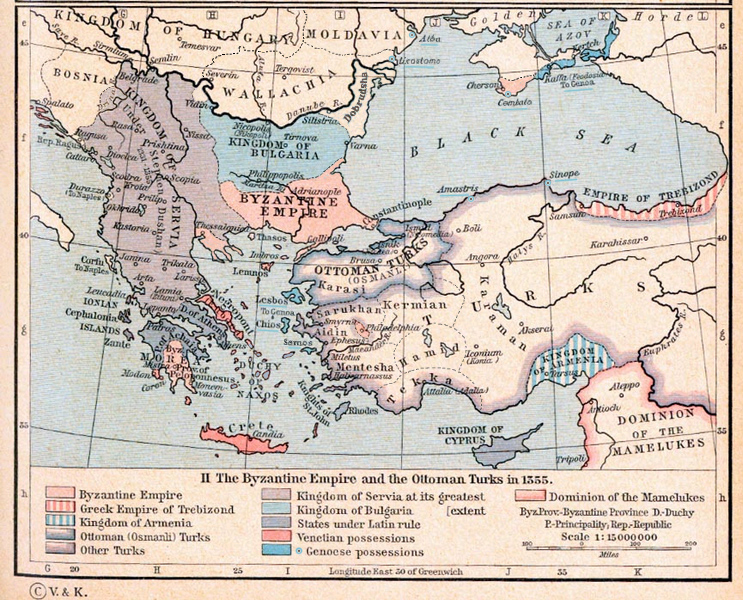
The history of medieval Serbia is a saga of transformation. It is the story of a collection of tribal principalities evolving into a powerful empire that briefly stood as a rival to the Byzantine world. Situated at the crossroads between the East and the West, medieval Serbia became a unique melting pot of culture, religion, and military prowess. This era did more than just establish borders; it forged the very identity, spirituality, and artistic heritage that define the Serbian nation today.
The Rise of the Nemanjić Dynasty
While early Serbian history involved various local chieftains, the true dawn of the medieval state began with Stefan Nemanja in the late 12th century. Nemanja was more than just a ruler; he was the architect of a national vision. By consolidating power and seeking independence from the Byzantine Empire, he established the Nemanjić Dynasty, a royal line that would rule for over two centuries.
Political Maneuvering was central to their success. In 1217, his son, Stefan the First-Crowned, secured a royal crown from the Pope, officially elevating Serbia to a kingdom. Simultaneously, his other son, Rastko—better known as Saint Sava—traveled to Nicaea to secure autocephaly for the Serbian Church. This move granted Serbia both political and spiritual independence, creating a “Symphonia” between the state and the church that persists to this day.
The Empire of Dušan the Mighty
The Nemanjić era reached its zenith under the reign of Stefan Dušan, also known as Dušan the Mighty. Taking advantage of Byzantine civil wars, Dušan expanded Serbian borders to include almost the entire Balkan Peninsula, including modern-day Montenegro, Albania, North Macedonia, and large parts of Greece.
In 1346, Dušan proclaimed himself “Emperor of the Serbs and Greeks.” He did not just rule through force; he sought to civilize his realm through law. He introduced Dušan’s Code (Zakonik), a comprehensive set of laws that regulated everything from the rights of the nobility to the protection of the poor. Under his rule, Serbia was not just a military power but a sophisticated European state with a thriving economy fueled by silver and gold mines.
Monasteries: The Spiritual and Artistic Bastions
One of the most enduring legacies of medieval Serbia is its architecture. The Nemanjić kings were prolific builders, viewing the construction of monasteries as a sacred duty to God and their people. Monasteries like Studenica, Gračanica, and Visoki Dečani remain some of the finest examples of Byzantine-influenced architecture in the world.
Artistically, these structures housed a revolution in fresco painting. Serbian artists moved away from the rigid, flat styles of the early Middle Ages toward a more humanized, emotive depiction of religious figures. The famous “White Angel” of Mileševa monastery is a prime example of this “Serbian Renaissance,” characterized by its elegance and technical mastery. These monasteries served as islands of stability, preserving literacy, law, and history through centuries of eventual occupation.
The Battle of Kosovo and the Ottoman Advance
The glory of the empire began to fade after the death of Dušan in 1355. Internal rivalries among the nobility weakened the central authority just as a new threat emerged from the east: the Ottoman Turks.
The turning point occurred in 1389 at the Battle of Kosovo. Led by Prince Lazar, the Serbian nobility faced the massive army of Sultan Murad I. While the battle was technically a draw—with both leaders losing their lives—it proved a strategic catastrophe for Serbia. The kingdom lost the majority of its elite fighting force, leaving the gates open for gradual Ottoman encroachment. The “Kosovo Myth” was born here, transforming a military defeat into a spiritual narrative of sacrifice and national survival.
The Final Stand: The Serbian Despotate
Despite the loss at Kosovo, Serbia did not fall immediately. The Serbian Despotate emerged under Stefan Lazarević, the son of Prince Lazar. Stefan was a knight, a poet, and a brilliant diplomat. He moved the capital to Belgrade and later to Smederevo, turning these cities into centers of culture and defense.
The Fall of Smederevo in 1459 finally signaled the end of Serbian medieval independence. The Ottoman Empire fully integrated the Serbian lands into its administration, ushering in nearly five centuries of foreign rule. However, the foundations laid during the Middle Ages—the legal codes, the church, and the architectural wonders—prevented the Serbian identity from being erased.
Conclusion
Medieval Serbia was an era defined by a delicate balance between iron and gold—the iron of its warriors and the gold of its church domes. Through the vision of the Nemanjić kings, a small Balkan principality rose to become a beacon of culture and law in Europe.
Ultimately, Middle Ages while the state fell to the Ottomans, the medieval legacy remained the blueprint for the modern Serbian state. The monasteries still stand, the laws still inspire, and the history of this era continues to be the bedrock upon which the nation is built.
