
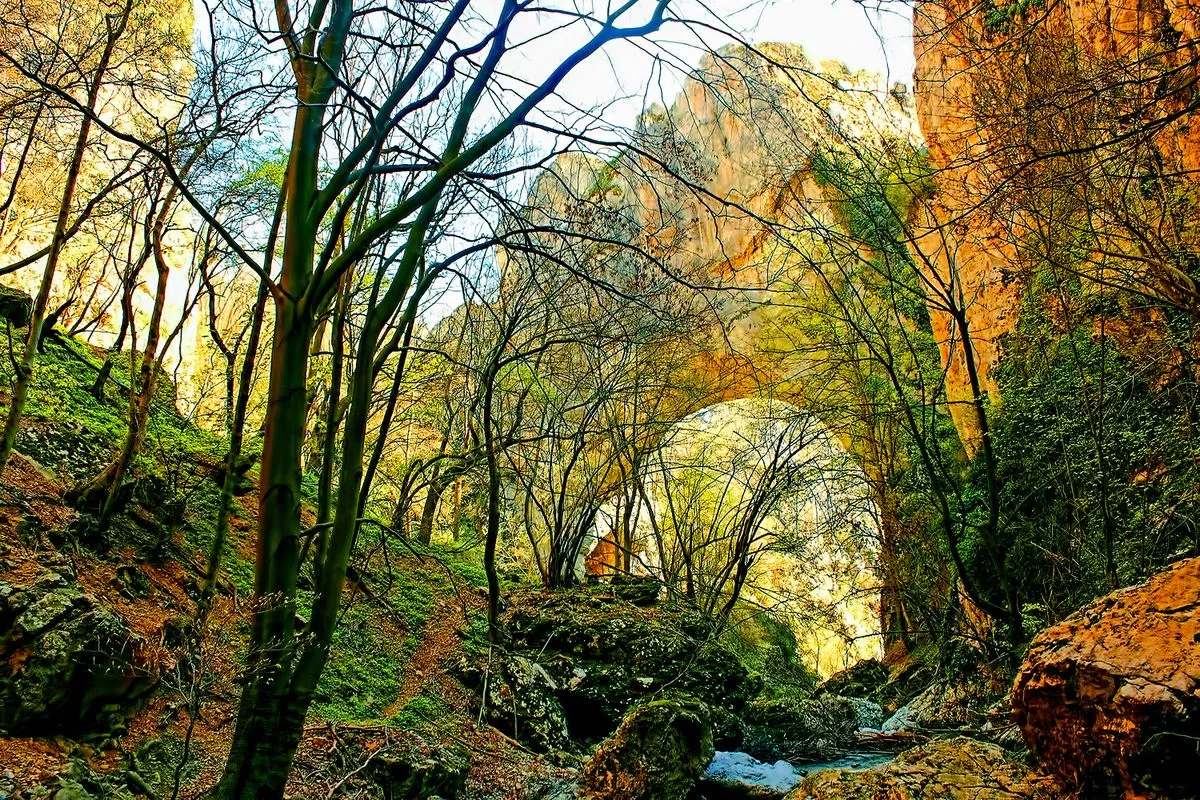
Serbia is a country that often remains underrated on the European tourism map, yet it holds stunning natural gems. One of the most breathtaking and most secluded geological attractions is the Vratna Gates (Vratnjanske Kapije), located in the heart of Eastern Serbia, near the town of Negotin.
The Vratna Gates are a remarkable series of three natural stone bridges (natural stone arches) that were sculpted by water erosion over thousands of years. The unique appeal of this site lies in the fact that all three arches stand in close proximity to one another, making it a rare and impressive geological phenomenon. Exploring this area offers a rewarding experience that seamlessly blends adventure with a deep appreciation for the power of nature.
1. Geological Formation: Nature’s Master Architecture
The Vratna Gates formed above the Vratna River, which flows through a gorge filled with limestone rock formations.
The Unique Erosion Process
Millions of years ago, the Vratna River flowed through a complex system of underground caves. Over time, the relentless water caused the cave ceilings to collapse. Crucially, it left segments of strong limestone rock intact to form the arched bridges we see today. This process provides tangible proof of the sheer force of water, capable of carving monumental structures from solid rock.
The Three Legendary Gates
Three main gates are dispersed along the river gorge, each possessing a distinct character and size:
- Mala Kapija (The Small Gate): This is the first arch visitors encounter when approaching the gorge. It acts as a magnificent introduction to the site’s beauty.
- Velika Kapija (The Great Gate): Undeniably, this is the most spectacular arch, boasting a height of approximately 45 meters and a width of around 20 meters. Its sheer size creates an awe-inspiring sight.
- Suva Kapija (The Dry Gate): Located the farthest upstream, this gate earned its name because the Vratna River typically flows underground in this section, except during periods of heavy rain or flooding.
2. Vratna Monastery: The Spiritual Guardian of the Gorge
Not far from the stone bridges, the Vratna Monastery (Manastir Vratna) stands sentinel. Its presence adds a vital spiritual and historical dimension to the natural site.
Historical Legacy
Founded in the 14th century, the monastery has a history marked by conflict and eventual revival. Local tradition suggests that a Serbian King established the monastery, designating it as a spiritual fortress in the remote region. The monastery’s location in the hidden valley fosters an atmosphere of profound peace and contemplation.
Cultural Role
Today, the monastery houses monks who actively preserve religious traditions. Furthermore, the community runs a renowned deer farm that provides venison for local consumption and helps support the monastic community financially.
3. Ecotourism and Adventure Potential
The Vratna Gates offer more than just picturesque views; they serve as a center for ecotourism and outdoor activities.
Hiking and Accessibility
Visitors can easily access the Small Gate (Mala Kapija). However, reaching the Great Gate and the Dry Gate requires a more substantial hike through the gorge. Although the trails are well-marked, hikers should wear sturdy footwear and be prepared for somewhat challenging terrain.
Biodiversity
The Vratna Gorge is home to diverse flora and fauna, including various bird species and other wildlife. This area offers exceptional opportunities for nature photographers and botany enthusiasts to explore.
4. Future Opportunities and Challenges
While the Vratna Gates possess unparalleled beauty, they face challenges related to visibility and conservation.
- Limited Infrastructure: Due to its remote location, the surrounding tourism infrastructure remains relatively undeveloped compared to other European attractions. This ensures a more authentic, untouched atmosphere, but it also demands careful planning from visitors.
- Conservation: Local authorities must manage increased tourism carefully to protect the fragile geological formations and the local ecosystem.
In conclusion, the Vratna Gates are a remarkable, hidden gem of Serbia. They offer a rare fusion of natural wonder carved by erosion, spiritual history preserved by an ancient monastery, and an authentic sense of adventure. For those seeking raw, unspoiled natural beauty far from the crowds, the Vratna Gates provide an unforgettable destination.
