
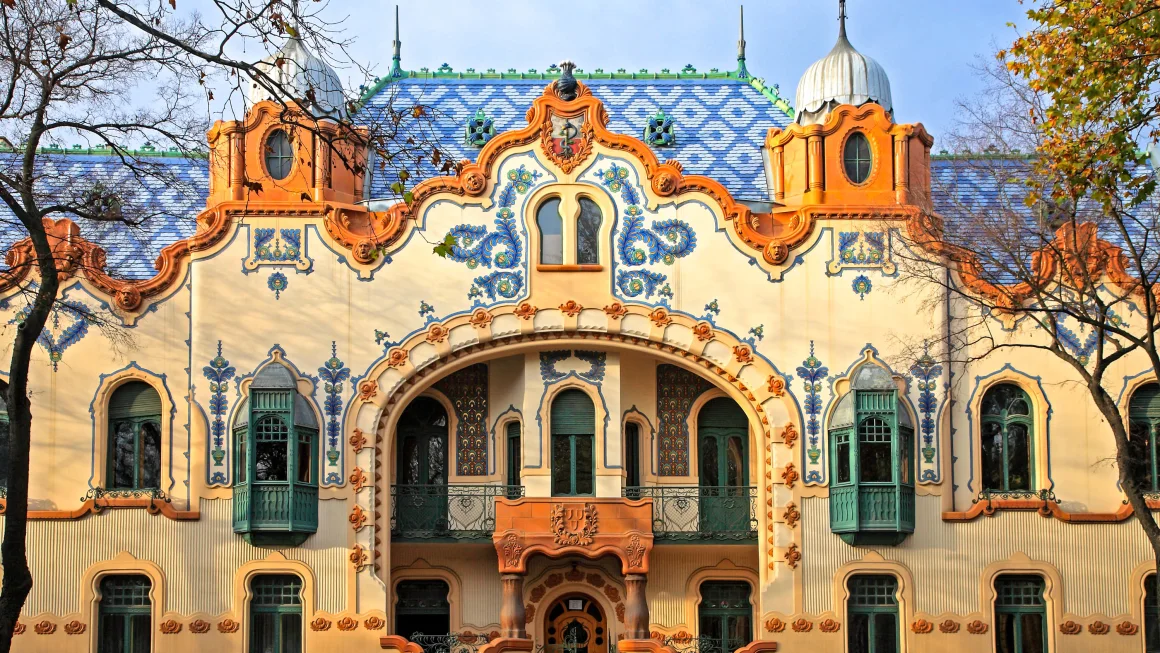
Subotica is a city that feels like a beautiful contradiction. Nestled in the northernmost part of Serbia, in the autonomous province of Vojvodina, it offers visitors a striking blend of Central European elegance and Balkan warmth. Significantly, while geographically in Serbia, its history, culture, and especially its architecture tell a story deeply intertwined with Hungary and the Austro-Hungarian Empire.
Furthermore, the city stands as Serbia’s most compelling showcase of Art Nouveau (or Secession style) architecture. This visual feast, combined with its multicultural atmosphere and the nearby serenity of Lake Palić, makes Subotica a hidden gem on the European map. Therefore, it is a key destination for those who appreciate historical depth and breathtaking design.
1. An Architectural Masterpiece: The Art Nouveau Showcase
To begin with, the defining characteristic of Subotica is its architecture. Unlike the neoclassical styles that dominate many European capitals, Subotica instead embraced the whimsical, nature-inspired flow of Art Nouveau in the early 20th century.
The City Hall (Gradska Kuća)
Foremost among these is the magnificent City Hall. Completed in 1912 by Hungarian architects Marcell Komor and Dezső Jakab, it is a towering structure adorned with Zsolnay ceramics in shades of green, yellow, and blue. Its towering spire and intricate floral motifs make it a stunning focal point. Moreover, inside, the stained-glass windows cast kaleidoscopic colors across the Grand Hall, making a visit absolutely essential.
Other Secession Gems
In addition to the City Hall, the style is evident everywhere in Subotica. The Raichle Palace, also designed by Ferenc Raichle, is another must-see. Its ornate, asymmetrical façade and rich detailing showcase the romantic, playful spirit of the Secession movement. Finally, visitors should also explore the Synagogue, one of the finest examples of Hungarian Secessionist Jewish religious architecture in the world, notable for its beautiful rose window and ceramic decoration.
2. A Cultural Crossroads: Subotica’s Identity
Moving beyond architecture, Subotica holds a unique place in the Balkans due to its deep history of cultural coexistence. For instance, it is officially bilingual, with Serbian and Hungarian both spoken widely.
Linguistic Diversity
Crucially, the population is a mix of Serbs, Croats, Hungarians, and Bunjevci. This blend is not just a statistical fact; it is evident in the local cuisine, the signs on the streets, and the numerous cultural institutions that celebrate each heritage. Ultimately, this multicultural harmony adds a rich layer of complexity to the city’s character.
Local Delights
Correspondingly, the culinary scene vividly reflects this diverse heritage. You can find traditional Serbian ćevapi alongside hearty Hungarian goulash and local pastries. Furthermore, visitors should try the locally produced wines from the nearby vineyards, given that the region boasts a long history of winemaking.
3. The Tranquility of Lake Palić
After experiencing the urban beauty, we turn to the tranquility of Lake Palić. Just a short drive (about 8 kilometers) from the city center, Lake Palić offers a peaceful escape. Historically, it was a popular spa and resort area for the wealthy citizens of Subotica.
A Natural Retreat
Around the lake’s promenade, you will find charming villas that continue the Art Nouveau aesthetic, including the Water Tower and the Grand Terrace. These structures, built at the same time as the City Hall, lend the resort a nostalgic, fairytale atmosphere. Currently, the lake is a favorite spot for cycling, long walks, and birdwatching, thereby providing a quiet counterpoint to the city’s architectural bustle.
Festivals and Activities
In addition, Palić hosts several renowned events, most notably the Palić European Film Festival in the summer. The area offers various activities, such as boat rides on the lake or exploring the nearby Palić Wine Route, which guides visitors through local cellars and vineyards.
In conclusion, Subotica is a destination that rewards the patient traveler. While it lacks the frantic pace of larger European hubs, it offers in return a stunning concentration of Art Nouveau brilliance. It is a city that invites you to slow down, to admire the architectural details, and to appreciate the unique cultural melting pot that defines the northern heart of Serbia.
