
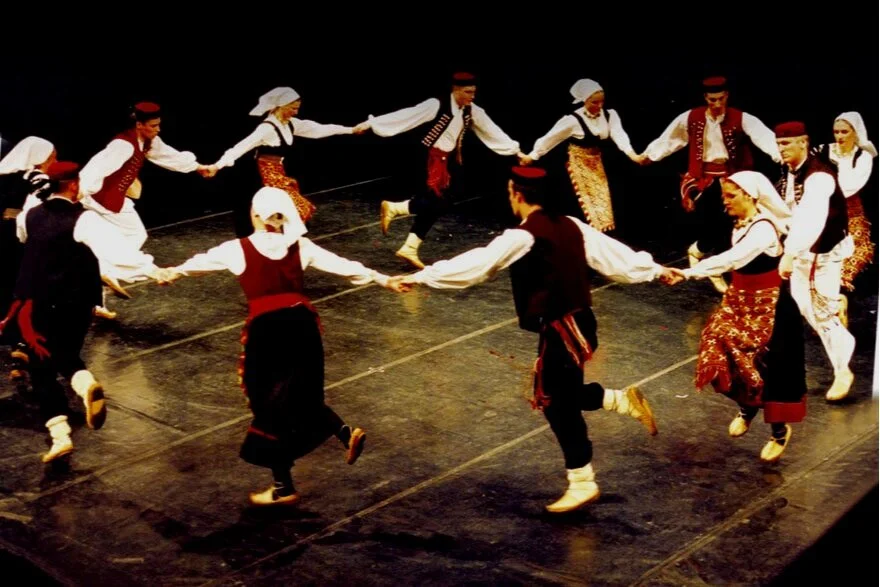
Serbian dance, universally known as Kolo, is far more than mere choreography; it is a profound expression of national identity, community spirit, and historical resilience. Found at the heart of every Serbian celebration, from weddings and national holidays to local village gatherings, Kolo stands as a vibrant, enduring cultural symbol.
Essentially, Kolo is a collective folk dance performed in a circle (kolo literally translates to “circle” or “wheel”). It links participants physically and emotionally, creating a powerful, unbroken chain of movement that symbolizes unity and continuity.
Historical Roots and Significance
The roots of Kolo delve deep into Slavic and Balkan history, intertwining with ancient rituals and tribal practices. Historically, the circle formation held significant meaning:
- Unity and Equality: The closed circle signifies equality among participants, where no one stands at the head or the end. However, the most skilled dancer often takes the lead position, setting the tempo and complexity of the steps.
- Protection: Ancient traditions often viewed the closed circle as a form of protection, symbolically warding off evil spirits and promoting health and fertility for the community.
- Social Function: Kolo traditionally served as a primary social outlet. It was often the only acceptable context for young men and women to hold hands publicly, thereby facilitating courtship and community bonding.
Throughout history, during periods of foreign occupation and political turmoil, Kolo served a vital role in preserving Serbian heritage, providing a non-verbal yet powerful platform for collective memory and defiance.
Anatomy of the Dance: Steps and Structure
Kolo is defined by its structure, its rhythm, and the absence of individual partners.
The Formation
Kolo requires participants to stand in a tight circle, either holding hands or linking arms around the waist of the next person. The dancers move predominantly in a counter-clockwise direction, although some variations also incorporate clockwise movements.
Key Characteristics
- Improvisation and Leadership: While the basic rhythm is fixed, the dance is often spontaneous. The lead dancer introduces new steps or variations, and the rest of the group follows instantly. This dynamic interplay between leader and group is crucial.
- Footwork: Kolo primarily relies on complex, rapid footwork close to the ground. The steps are rarely flashy or high-kicking; instead, they emphasize precise, synchronized shuffles, skips, and quick stamps, demonstrating agility and synchronization.
- Rhythm and Tempo: The rhythm dictates the mood. Slower, more graceful melodies accompany the initial stages of the dance, while the tempo increases to a frenetic pace as the celebration continues, demanding intense physical exertion.
Regional Variations
It is important to note that Kolo is not a single dance. Every region within Serbia (and the wider Balkan area) boasts its own unique Kolo variations, distinguished by rhythm, musical accompaniment, and complexity. For instance:
- Užičko Kolo: Perhaps the most famous and universally recognized Kolo. It is characterized by its high speed and intricate foot patterns, making it a staple at nearly every Serbian wedding.
- Vlaško Kolo: This variation often incorporates stronger movements and occasional vocal accompaniment.
- Šumadijsko Kolo: Tends to be more restrained in movement but requires precise rhythm changes.
The Role of Music
The music supporting Kolo is integral to the dance’s identity. Traditionally, Kolo was accompanied by instruments such as the gajde (bagpipes) or frula (a traditional flute). However, modern Kolo music typically features the accordion, violin, and sometimes the tamburica (a plucked string instrument).
The music serves as the engine, with its distinctive 2/4 or 6/8 time signatures driving the collective movement. The sudden changes in rhythm and tempo challenge the dancers, testing their focus and unity.
Kolo in the Modern Era
Today, Kolo continues to thrive as a core element of Serbian heritage, both in the homeland and among the large diaspora community worldwide.
Furthermore, Kolo has evolved into a highly respected form of cultural preservation. Numerous Serbian folklore ensembles and dance groups dedicate themselves to meticulously studying and performing regional Kolo variations on international stages. These performances often showcase elaborate traditional costumes (nošnja), highlighting the rich embroidery and craftsmanship of specific regions.
In essence, whether performed spontaneously at a family gathering or precisely choreographed in a theater, Kolo maintains its original purpose: to connect people, celebrate joy, and reaffirm the collective identity of the Serbian nation. The unbroken circle remains a powerful metaphor for tradition that never ends.
