
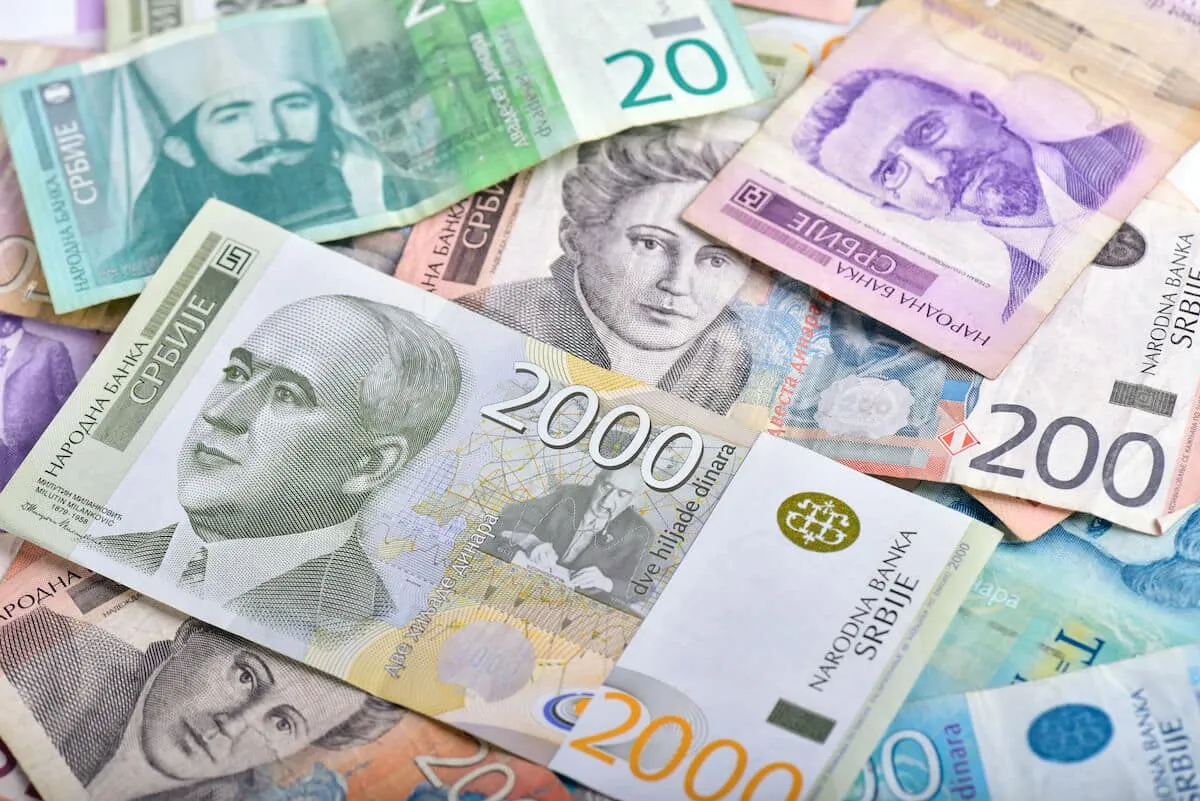
The Serbian Dinar (RSD) is more than just the national currency; it is a symbol of the nation’s independence, its turbulent history, and its ongoing struggle for economic stability. As the primary medium of exchange in the Republic of Serbia, the Dinar possesses a lineage that stretches back to the medieval Serbian Empire. Consequently, its journey through hyperinflation, reforms, and eventual stabilization tells a compelling story of economic resilience.
Understanding the Dinar involves looking at its historical context, its role in modern Serbian economics, and the challenges it faces as the country seeks deeper European integration.
1. A Name with Ancient Roots: The Medieval Dinar
The name Dinar itself carries significant historical weight, derived from the ancient Roman denarius.
The First Serbian Dinars
The first recorded use of the Dinar in Serbia dates back to 1214, during the reign of Stefan the First-Crowned of the Nemanjić dynasty. Serbian monarchs minted Dinars modeled after Venetian silver currency. This early Dinar served as evidence of the Serbian state’s sovereignty and its active participation in medieval European trade routes.
Disappearance and Reappearance
Following the Ottoman conquest in the 15th century, the Dinar disappeared from circulation, replaced by Ottoman currency. The currency only reappeared centuries later. Specifically, the modern Dinar was reintroduced in 1868 after Serbia gained significant autonomy from the Ottoman Empire. This revival symbolized the nation’s political and economic liberation.
2. The Period of Hyperinflation (1990s)
The most infamous and economically devastating chapter in the Dinar’s history occurred during the 1990s, following the breakup of Yugoslavia.
Record Inflation Rates
Serbia, then part of the Federal Republic of Yugoslavia, experienced one of the worst instances of hyperinflation in world history. Driven by economic sanctions, war, and loose monetary policy, inflation skyrocketed. At its peak in January 1994, the monthly inflation rate reached an astronomical 313 million percent.
The Impact of Devaluation
During this crisis, the government repeatedly issued new banknotes with ever-increasing denominations. For example, notes were issued up to 500 billion Dinars. This rendered the currency practically worthless. This era left a deep psychological scar on the population, making them favor strong foreign currencies, like the German Mark (and later the Euro), for savings and large transactions.
3. The Modern Serbian Dinar (RSD)
Since 2003, the currency has been managed by the National Bank of Serbia (NBS), which has prioritized price stability.
Currency Features
The modern Dinar is denominated in both banknotes and coins (known as para). Banknotes feature prominent historical figures, artists, and scientists, including Nikola Tesla (100 RSD) and Jovan Cvijić (500 RSD). These figures serve as cultural statements, connecting the currency to national achievements.
Monetary Policy and Stability
The NBS uses a managed floating exchange rate regime. The primary goal is to maintain low and stable inflation. Consequently, the NBS intervenes in the foreign exchange market to curb excessive volatility, ensuring the Dinar remains predictable and supports economic growth.
4. The Euro Question
Serbia currently holds candidate status for membership in the European Union, making the adoption of the Euro a long-term economic goal.
- Convergence Criteria: Before adopting the Euro, Serbia must meet the convergence criteria (Maastricht Criteria), which include long-term interest rate stability, fiscal discipline, and exchange rate stability within the ERM II system.
- Public Preference: Despite the official status of the Dinar, the Euro is widely used in the country. Many Serbians price real estate, cars, and major investments in Euros. Furthermore, many citizens hold their savings in Euro accounts, reflecting the lingering effects of the hyperinflationary past.
In conclusion, the Serbian Dinar is a currency that embodies the national narrative. Its journey from medieval silver to the hyperinflated bills of the 1990s demonstrates incredible volatility. Today, however, the Dinar stands as a symbol of stabilization, carefully managed by the NBS. Ultimately, while the Euro remains a powerful economic force in the country, the Dinar maintains its essential role as the backbone of the independent Serbian economy.
