
Serbia, a country situated at the crossroads of Central and Southeast Europe, possesses a rich tapestry of history, culture, and stunning natural beauty. Consequently, its landmarks tell compelling stories, spanning from the grandeur of ancient Roman engineering and medieval fortresses to the resilience of modern architectural achievements.
Beyond the vibrant energy of its capital, Belgrade, Serbia offers travelers a journey through diverse landscapes and historical eras. For this reason, this article highlights some of Serbia’s most iconic landmarks—places that define the nation’s unique spirit and enduring heritage.
1. Belgrade Fortress (Kalemegdan)
The Belgrade Fortress, or Kalemegdan, is perhaps the most recognizable symbol of the city and the nation. Perched atop a ridge overlooking the confluence of the Sava and Danube rivers, this colossal structure has witnessed over 2,000 years of history.
- Strategic Significance: The fortress was built by the Celts and subsequently rebuilt countless times by Romans, Byzantines, Ottomans, and Austro-Hungarians. Furthermore, its position made it a crucial military strategic point, earning Belgrade the title of “Gate of the Balkans.”
- The Park: Today, the fortress grounds house a sprawling park, museums, and monuments, serving as Belgrade’s central recreational area. Visitors enjoy unparalleled sunset views over the rivers and can explore the Military Museum and the famous Victor Monument.
2. St. Sava Temple (Hram Svetog Save)
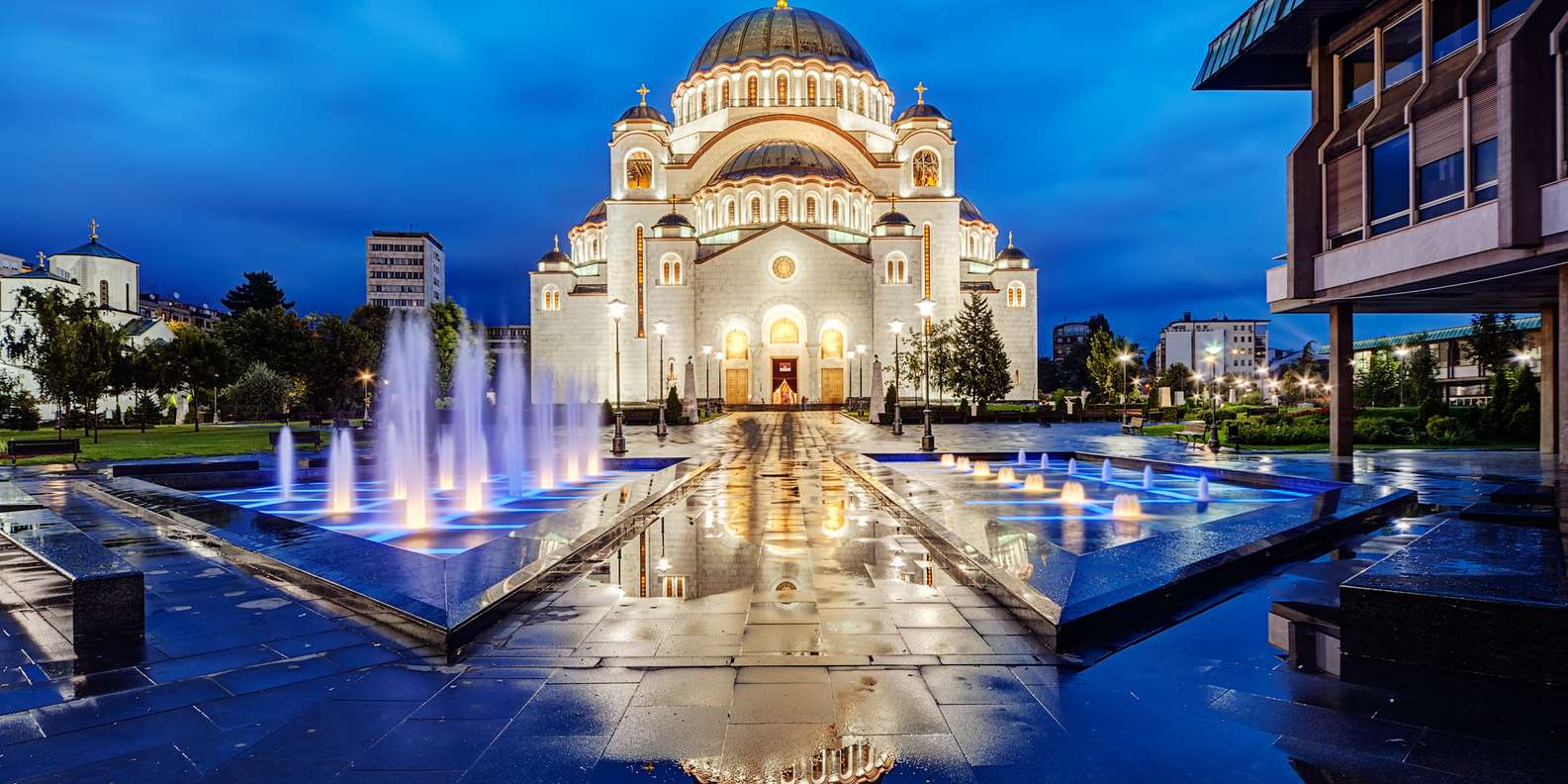
Located in the Vračar plateau in Belgrade, the Temple of St. Sava is one of the largest Orthodox churches in the world and an architectural marvel. Dedicated to St. Sava, the founder of the Serbian Orthodox Church, the structure dominates the city skyline.
- Architecture and Scale: The temple is built in the Serbian-Byzantine style. Thus, its vast size and dazzling white exterior make a profound impression. Although the interior work, featuring mosaics and frescoes, is still ongoing, the completed parts showcase immense artistic and religious devotion. Indeed, the mosaic decorations cover thousands of square meters, making it one of the largest such projects globally.
3. Đerdap National Park and the Iron Gates Gorge
Moving away from urban centers, the Đerdap National Park offers natural wonders, centered around the magnificent Iron Gates Gorge (Đerdapska klisura). This gorge is the deepest and longest in Europe.
- The Danube: The Danube River cuts through the Carpathian Mountains here, thereby creating a breathtaking series of canyons, cliffs, and bays. The area is often called the “Danube’s Valley of Wonders.”
- Tabula Traiana: Moreover, embedded in the cliff face on the Romanian side, the Tabula Traiana is a commemorative plaque erected by the Roman Emperor Trajan to mark the successful completion of the Roman military road built along the Danube in the first century AD. Ultimately, this serves as a powerful reminder of the region’s ancient significance.
4. Studenica Monastery
For those seeking historical and spiritual depth, the Studenica Monastery is a must-see. Located in Central Serbia, this 12th-century monastery is recognized as a UNESCO World Heritage site.
- Royal Foundation: Founded by Stefan Nemanja, the founder of the medieval Serbian state, Studenica is considered the “Mother Church” of the Serbian Orthodox world. It houses magnificent 13th- and 14th-century Byzantine-style fresco paintings.
- Architectural Style: Specifically, the architecture combines Romanesque and Byzantine elements, thereby creating a unique style known as the Raška School. Its serene location further adds to its spiritual ambiance.
5. Petrovaradin Fortress (The Gibraltar of the Danube)
Situated in Novi Sad, the Petrovaradin Fortress is a massive Baroque structure. It gained the nickname “The Gibraltar of the Danube” chiefly due to its strategic location and strong defenses.
- Austro-Hungarian Legacy: Built by the Austro-Hungarian Empire in the 17th and 18th centuries, the fortress features miles of underground tunnels and galleries.
- The EXIT Festival: Today, Petrovaradin is most famous as the host of the annual EXIT Music Festival, one of Europe’s largest music events, showcasing the fortress’s transition from military stronghold to a hub of modern culture.
In conclusion, the landmarks of Serbia offer a compelling narrative of survival, faith, and cultural fusion. In fact, from the enduring fortifications of Kalemegdan to the sacred stillness of Studenica, and the breathtaking grandeur of the Iron Gates Gorge, Serbia invites visitors to explore a land where every stone tells a story of the Balkans.
