
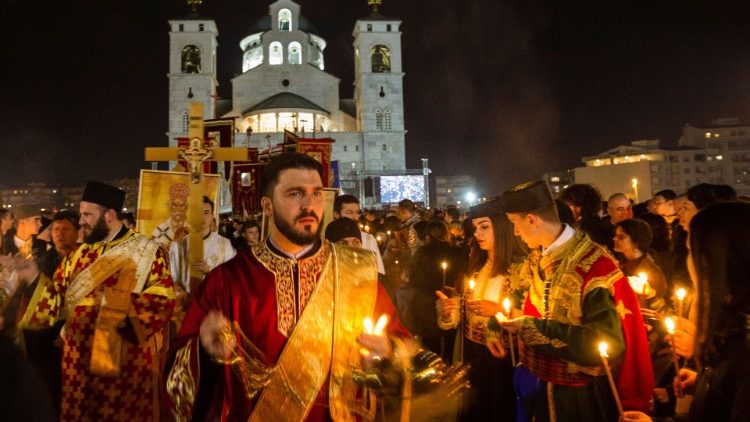
Religion is far more than a matter of private faith in Serbia; it is an inseparable element of national identity, historical resilience, and cultural life. Situated at the crossroads of empires and civilizations, the nation’s spiritual landscape has been shaped by centuries of conflict, conversion, and cohabitation.
The most dominant religious force is the Serbian Orthodox Church (SOC). However, the country also hosts a significant array of other faiths, reflecting its rich and complex Balkan history. Understanding religion in Serbia is key to comprehending its people, its traditions, and its role in the geopolitical landscape of Southeast Europe.
The Dominance of Eastern Orthodoxy
The vast majority of Serbia’s population adheres to the Serbian Orthodox Church. This affiliation is the defining pillar of Serbian identity.
Saint Sava and Autocephaly
The history of the SOC is inextricably linked to Saint Sava (Rastko Nemanjić), the son of the founder of the medieval Serbian state. In 1219, St. Sava secured the church’s autocephaly (independence) from the Ecumenical Patriarchate in Constantinople. This act was crucial because it provided the Serbian people with a spiritual and cultural identity distinct from both the Catholic West and the Orthodox East.
The Role During Ottoman Rule
During the nearly five centuries of Ottoman occupation, the SOC served as the paramount institution preserving Serbian language, culture, and national consciousness. Monasteries like Studenica and Visoki Dečani became vital centers of learning and resistance. Consequently, the Church earned a unique status as the guardian of the nation’s spirit.
Slava: A Unique Serbian Tradition
Serbian Orthodoxy is distinguished by the custom of the Slava. This is the celebration of the family’s patron saint. Unlike other Orthodox traditions that celebrate the feast day of the saint’s name, the Slava is an inherited celebration passed down through the male line. It involves specific rituals and elaborate feasts, making it the single most important social and religious event for Serbian families.
Religious Minorities: A Balkan Mosaic
While Orthodoxy prevails, Serbia is home to several prominent religious minorities, especially in its northern region of Vojvodina and the southern Sandžak area.
Catholicism
Catholicism is primarily present in Vojvodina, reflecting the region’s historical ties to the Austro-Hungarian Empire. Specifically, Hungarian and Croatian minorities form the bulk of the Catholic population. Their churches are often built in the Baroque style, contrasting with the Byzantine architecture of the Orthodox monasteries.
Islam
Islam has a long history in Serbia, dating back to the Ottoman era. Today, the majority of Muslims live in the southwestern region of Sandžak and are predominantly Bosniaks and ethnic Albanians. Furthermore, Belgrade is home to the historic Bajrakli Mosque, a reminder of the city’s multicultural past.
Protestantism
Protestantism is also concentrated in Vojvodina, with denominations like Lutheranism and Calvinism practiced primarily by Slovak and Hungarian minorities.
Religion and Modern Serbian Identity
In the post-Yugoslav era, religion experienced a significant public resurgence. Following decades of state atheism under the communist regime, the SOC reclaimed its public role.
- National Symbolism: Today, affiliation with the SOC is often viewed as synonymous with being Serbian. This link was particularly strengthened during the conflicts of the 1990s, where religion became a marker of ethnic distinction.
- Architecture: The construction of the vast St. Sava Temple in Belgrade is a monumental project. It symbolizes the renaissance of Serbian Orthodoxy and national pride.
However, despite the dominance of the SOC, Serbia remains a secular state on paper. The government guarantees freedom of religion, and the constitution mandates the separation of church and state.
In conclusion, religion in Serbia is a powerful cultural and historical current. The Serbian Orthodox Church stands as the bedrock of national identity, while the presence of Catholic, Muslim, and Protestant communities creates a complex and diverse spiritual landscape. Ultimately, to understand Serbia is to recognize the profound and enduring role that faith plays in the lives and history of its people.
