
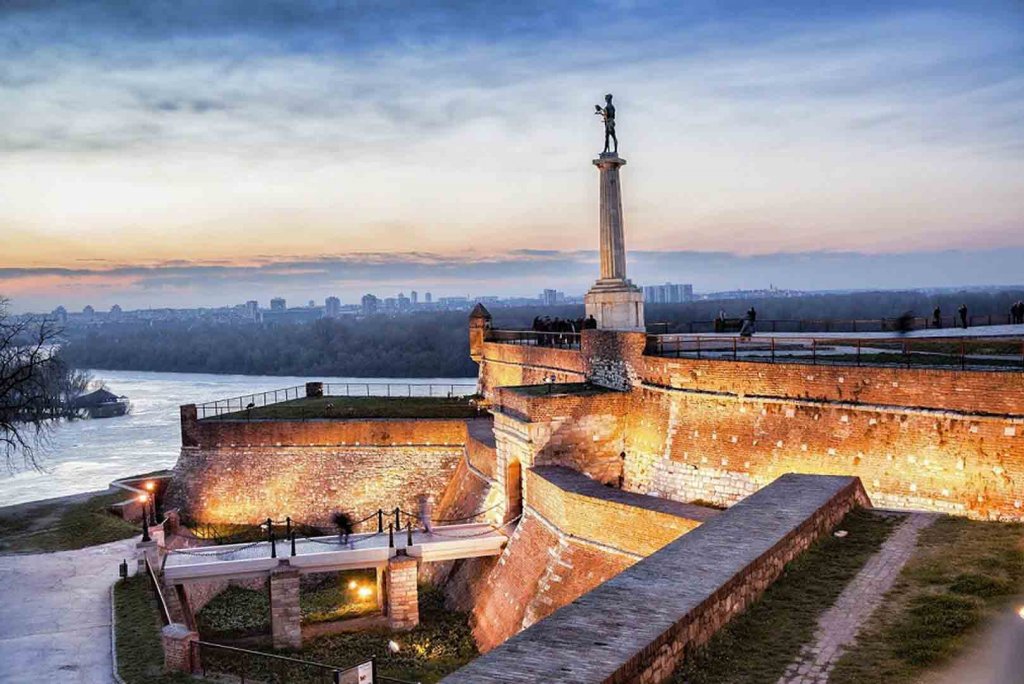
Kalemegdan stands high above the meeting point of the Sava and Danube rivers. It is the most significant historical landmark in Belgrade. This site is not just a fortress or a park. Instead, it is a living record of European history.
For over two millennia, this site served as a frontline for great empires. Roman legions, Byzantine emperors, Ottoman pashas, and Austro-Hungarian generals all fought for this ground. Today, the fortress serves a peaceful purpose. It is Belgrade’s largest public park and a sanctuary for culture and greenery.
The Origins: From Singidunum to Kalemegdan
The history of the fortress began in the 1st century AD. The Romans established a military camp here called Singidunum. The location provided a perfect strategic advantage. It offered a clear view of the Pannonian Plain and control over two major rivers.
The name “Kalemegdan” comes from the Ottoman era. It combines two Turkish words: Kale (fortress) and Megdan (battlefield). During Ottoman rule, the area outside the walls was an empty field. Soldiers used it for maneuvers and fierce combat. Later, the Serbs transformed this old battlefield into a lush park.
Exploring the Upper and Lower Town
The fortress has two main sections: the Upper Town and the Lower Town. Each area shows a different side of the city’s defensive past.
The Upper Town (Gornji Grad) This is the highest part of the fortress. It houses the most famous structures. You can find the Despot Stefan Tower here, which dates back to the 15th century. Walking through gates like the Clock Gate or the Zindan Gate feels like entering a medieval story. The Upper Town also features a Military Museum. It displays tanks and artillery right in the fortress trenches.
The Lower Town (Donji Grad) This section sits closer to the riverbank. It was once the busy civilian heart of Belgrade. Today, it is much quieter. You can visit the Nebojša Tower, which the Ottomans used as a dungeon. Another highlight is the Ružica Church. It features unique chandeliers made from spent bullet casings and saber blades.
The Victor: Belgrade’s Iconic Symbol
No visit is complete without seeing Pobednik (The Victor). This bronze monument honors Serbia’s victories in the Balkan Wars and World War I. The famous sculptor Ivan Meštrović created this piece.
Today, The Victor is the ultimate symbol of Belgrade. He stands on the fortress ridge and gazes across the rivers. He holds a sword and a falcon. These items represent the strength to fight and the vigilance to keep the peace.
A Hub of Culture and Life
Kalemegdan is more than an outdoor museum. It is the social heart of the city. On any given day, you will see a mix of local life. Elderly men play intense games of chess on stone tables. Young couples watch the sunset from the ancient walls. Families also visit the Belgrade Zoo, located within the fortress grounds.
The site also promotes science and art. It houses an Observatory, a Planetarium, and several galleries. The Cvijeta Zuzorić Art Pavilion continues to host modern exhibitions. It bridges the gap between old history and new Serbian art.
Natural Beauty at the Confluence
The natural setting is the greatest asset of Kalemegdan. The “Ušće,” where the Sava meets the Danube, creates a visual spectacle. At sunset, the rivers reflect shades of gold and purple. This view has inspired writers for centuries. The park itself offers winding paths and hidden benches. It acts as a vital “green lung” for the busy city.
Practical Tips for Visitors
- Timing: Visit in the late afternoon. You can explore the towers in the light and see the sunset from the western walls.
- Footwear: The fortress is large and has uneven cobblestones. Wear comfortable walking shoes.
- Access: Entry to the park and fortress grounds is free. However, some specific museums and towers require a small entry fee.
Conclusion
Kalemegdan shows the resilience of Belgrade. The city was destroyed and rebuilt over forty times, yet the fortress remains. It is a place where history is etched into every stone. Whether you love history or just want a quiet moment, Kalemegdan offers a deep look into the Serbian identity. It is where the city began, and where its heart still beats.
