
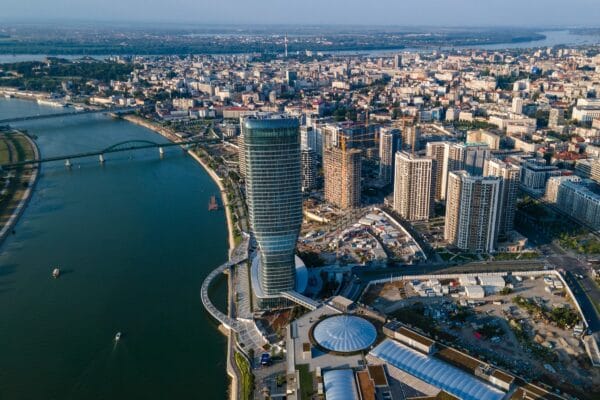
Serbia has rapidly transformed into one of the most attractive investment destinations in Southeast Europe. Its strategic location, competitive operating costs, and highly skilled workforce—particularly in the IT and engineering sectors—make it a prime choice for international companies. However, for any business looking to establish a presence, understanding the local labor landscape is crucial.
Employment in Serbia is governed by a robust legal framework that balances employee protection with the needs of a modern economy. This article provides a detailed overview of the essential aspects of hiring and managing employees in Serbia.
1. The Legal Framework: The Labor Law
The primary piece of legislation governing the workplace is the Serbian Labor Law (Zakon o radu). This law sets the minimum standards for employment contracts, working conditions, and termination procedures. While collective bargaining agreements and individual employment contracts can provide better conditions for the employee, they can never offer less than what the Labor Law mandates.
Employers must ensure that all employment relationships are formalized through a written contract. This contract must be signed before the employee starts working and must be kept at the business premises.
2. Types of Employment Contracts
In Serbia, there are two main types of employment relationships:
- Indefinite Term (Permanent): This is the default form of employment. The contract does not have a set end date and provides the highest level of job security for the employee.
- Definite Term (Fixed-Term): These contracts are used for specific projects or temporary increases in workload. Under Serbian law, a fixed-term contract can generally last for a maximum of 24 months with the same employer. If an employee continues working after this period, the law automatically treats the relationship as an indefinite-term contract.
Beyond these, there are also “out-of-employment” engagements, such as service contracts (Ugovor o delu) or temporary/occasional work, though these do not carry the same full spectrum of labor rights as a standard employment contract.
3. Understanding the Salary Structure
One of the most important aspects for foreign employers to grasp is the distinction between Net and Gross salary. In Serbia, salary is typically negotiated in “Net” terms (what the employee receives in their bank account), but the legal obligation of the employer involves “Gross” calculations.
The total cost for an employer (often called Gross 2) includes:
- Net Salary: The take-home pay for the worker.
- Income Tax: Currently at a flat rate of 10 percent (with a non-taxable threshold).
- Social Security Contributions: This covers pension and disability insurance, health insurance, and unemployment insurance.
In total, the tax and contribution burden amounts to approximately 60 to 65 percent on top of the net salary. Employers are responsible for calculating, withholding, and paying these taxes to the state authorities on a monthly basis.
4. Working Hours, Holidays, and Annual Leave
The standard work week in Serbia is 40 hours, usually spread over five days. Overtime is permitted but is strictly regulated; it cannot exceed eight hours per week or four hours per day. Employers must pay a premium for overtime, which is at least 26 percent of the base hourly rate.
Regarding time off, the law provides the following:
- Annual Leave: Employees are entitled to a minimum of 20 working days of paid vacation per year. This number can increase based on years of service, complexity of work, or educational background.
- Public Holidays: Serbia observes 11 days of paid public holidays. If an employee must work on a holiday, they are entitled to a salary increase of at least 110 percent of their base rate.
- Sick Leave: The employer pays for the first 30 days of sick leave (usually at 65 percent of the average salary), after which the State Health Insurance Fund takes over the payments.
5. Hiring Foreign Nationals: The Single Permit
Serbia has recently modernized its immigration and work laws to attract global talent. As of 2024, the country introduced the Single Permit, which combines the residence permit and the work permit into one electronic document.
This change significantly reduces the bureaucratic burden for international companies. The process is now digitalized, allowing foreign workers to obtain their legal status more quickly. However, employers must still conduct a “labor market test” through the National Employment Service to prove that no qualified Serbian citizen is available for the specific role before hiring a non-resident.
6. Termination and Severance Pay
Terminating an employment contract in Serbia requires strict adherence to legal procedures. An employer cannot dismiss an employee without a valid reason, which usually falls into three categories:
- Work Performance: The employee lacks the skills or fails to achieve results.
- Conduct: The employee breaches work discipline or legal obligations.
- Redundancy: Operational changes or economic downturns make the position unnecessary.
In the case of redundancy, the employer must pay severance pay before the termination becomes effective. The minimum amount is determined by the employee’s years of service with that specific employer. Failure to follow the correct procedure or provide a valid reason often results in labor disputes, where courts frequently side with the employee.
7. Why Employ in Serbia?
Despite the regulatory requirements, the benefits of employing in Serbia are substantial. The government offers various subsidies and tax incentives, especially for companies that create a high number of jobs or invest in underdeveloped regions. Furthermore, there are significant tax breaks for hiring newly settled individuals (repatriates or foreigners) and for research and development activities.
The Serbian workforce is also known for its high proficiency in English and strong technical education, particularly in Belgrade, Novi Sad, and Niš. This makes the onboarding process for international companies much smoother than in other emerging markets.
Conclusion
Employing in Serbia offers a strategic advantage for companies looking for high-quality talent at a competitive cost. While the Labor Law provides strong protections for workers, the system is transparent and increasingly digitalized. By understanding the salary structures, respecting the mandatory leave policies, and following the correct termination protocols, international employers can build a stable and productive team in one of Europe’s most promising economies.
